

The Annoying Mug Holder
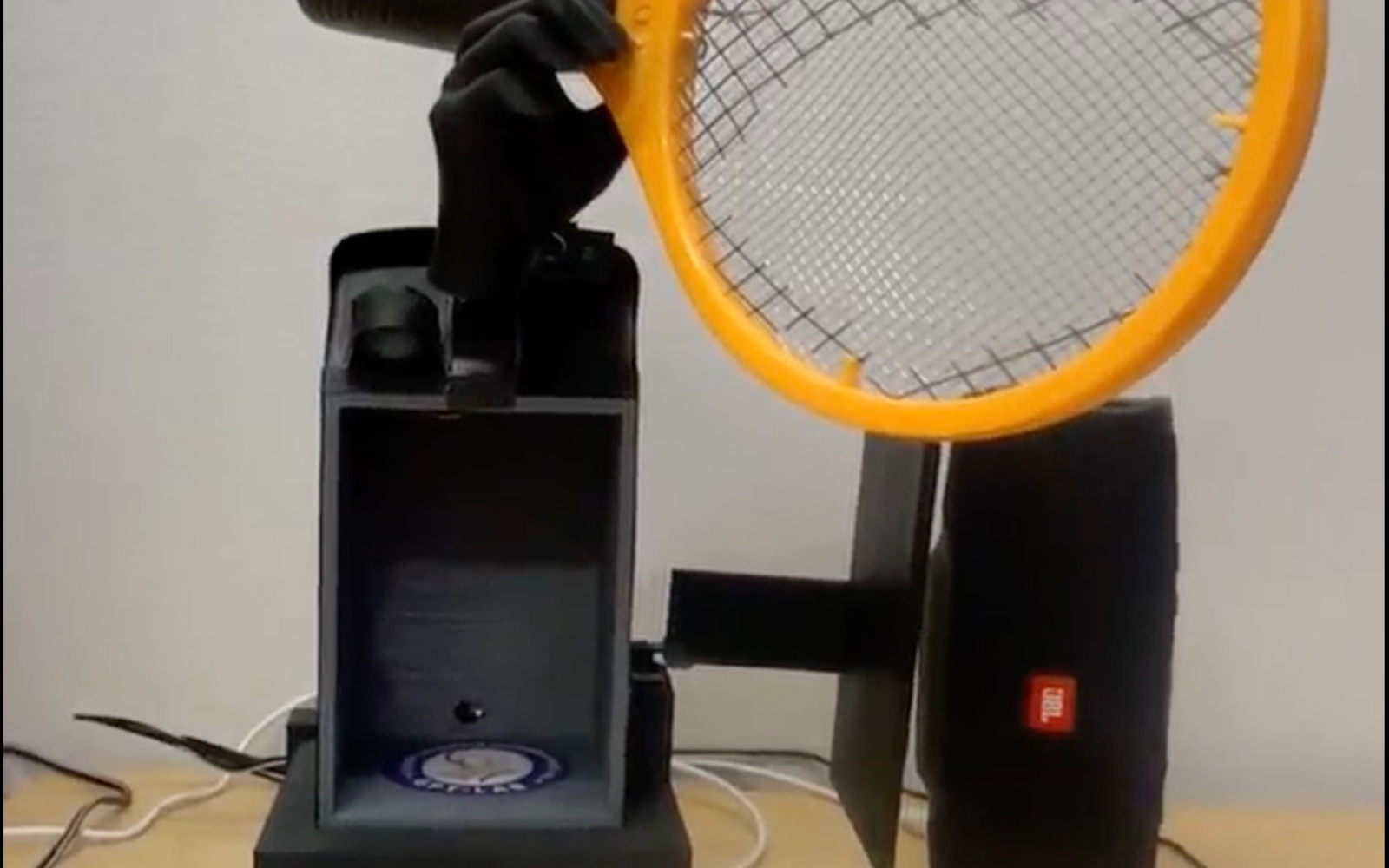
A sarcastic AI-powered drink holder that withholds your drink until you convince it that you have had a productive day.
Use Case
The Annoying Mug Holder is a playful productivity tool designed to encourage users to reflect on what they have accomplished during the day. The device keeps the user’s drink behind a revolving door until the user convinces its argumentative AI character that they have been productive enough to deserve it. Target Audience Students, remote workers, productivity enthusiasts, makers, AI developers, and people interested in humorous human–AI interaction, physical computing, and local language models.
Target Audience
Students, remote workers, productivity enthusiasts, makers, AI developers, and people interested in humorous human–AI interaction, physical computing, and local language models.
How It Works
The user tells the device what they have accomplished during the day. Speech is captured through a microphone and transcribed using a distilled Whisper model. The transcription is then processed by a locally running Qwen2.5 language model that has been fine-tuned to behave like a sarcastic and argumentative upper-class British character. The language model evaluates the user’s claims and generates a response. Kokoro Text-to-Speech converts the response into spoken audio. If the system believes the user has been productive, it can open the revolving door and release the drink. If it detects an unconvincing or dishonest claim, the device may activate and swing an electronic fly swatter as a humorous physical response. The system runs on a Raspberry Pi 5 and uses an ESP32 to control the servos. Because the language model and speech-processing components use a large share of the Raspberry Pi’s capacity, the first response may take around one minute, while later responses typically take approximately 15–30 seconds.
The system runs on a Raspberry Pi 5 and uses an ESP32 to control the servos. Because the language model and speech-processing components use a large share of the Raspberry Pi’s capacity, the first response may take around one minute, while later responses typically take approximately 15–30 seconds.
User Journey
- The user places a drink inside the holder.
- The revolving door keeps the drink inaccessible.
- A motion sensor detects the user’s presence.
- The user describes what they have accomplished during the day.
- Whisper transcribes the user’s speech into text.
- The locally running language model evaluates the claim and generates a sarcastic response.
- Kokoro Text-to-Speech reads the response aloud.
- If the user convinces the system, the door opens and the drink is released.
- If the system suspects dishonesty, it may activate the fly swatter.
Technologies
Raspberry Pi 5 with 8 GB RAM, ESP32, Qwen2.5 1.5B language model, distilled Whisper speech recognition, Kokoro Text-to-Speech, Python, two servo motors, motion sensor, microphone, revolving door mechanism, electronic fly swatter, and 3D-printed components.
Author
Sampo Perunka, Niklas Auranen
Project
GPT-Lab Summer Internship 2026