

Trash Sorter
An AI-powered recycling system that identifies waste with a camera and automatically tilts it into the correct recycling bin.
Use Case
Trash Sorter demonstrates how computer vision and automated actuation can be used to support waste sorting. The prototype can be applied in households, recycling points, educational contexts, offices, public spaces, and other environments where users need help placing waste into the correct bin.
Target Audience
Households, recycling facilities, schools, offices, public spaces, sustainability educators, and developers exploring AI-assisted waste sorting.
How It Works
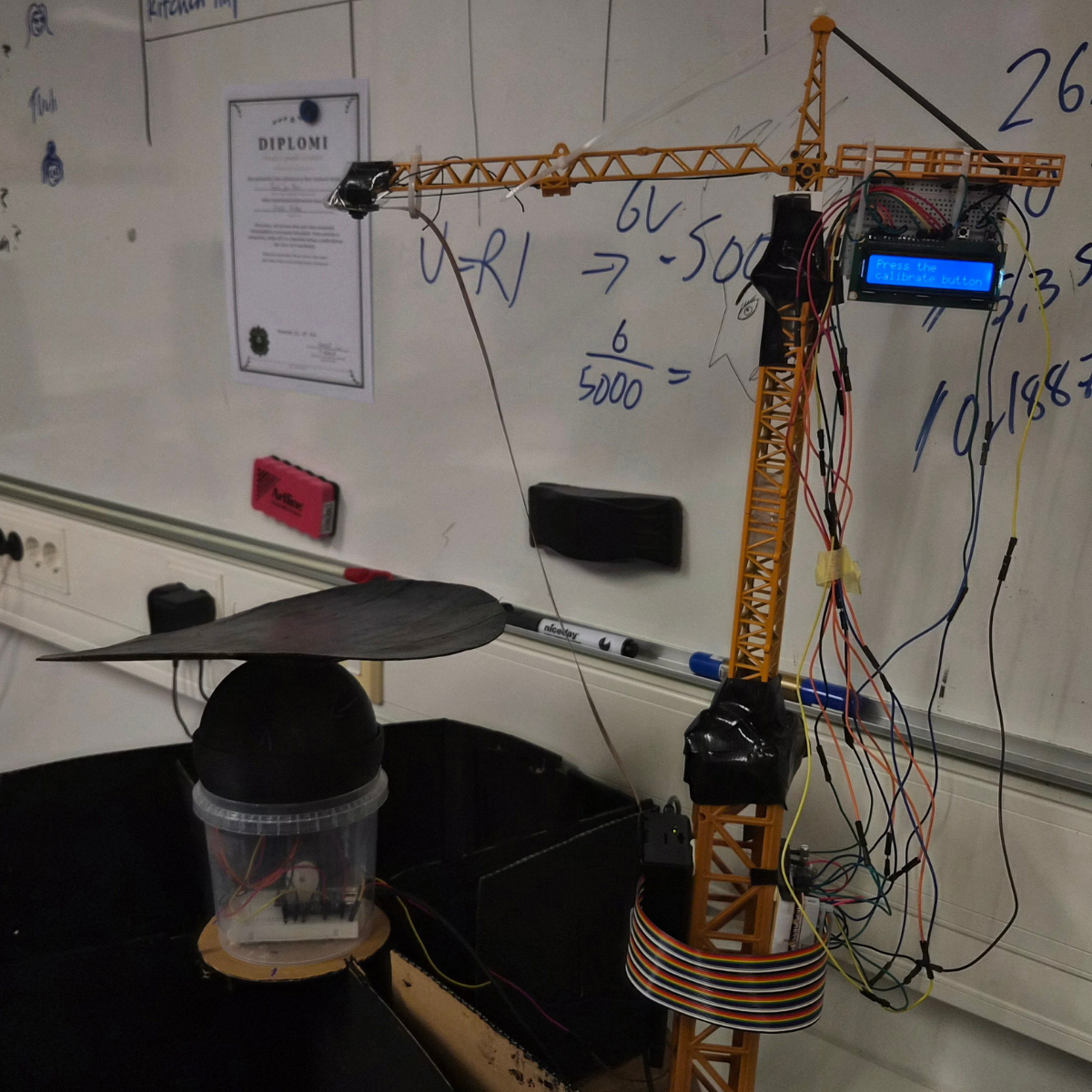
Trash Sorter is an automated recycling prototype that identifies a piece of waste and directs it towards the correct recycling bin. The user places an item on the platform, where a camera analyses it using a YOLOv8 computer vision model. Based on the detected waste category, the platform tilts towards the appropriate bin.
The system classifies waste into four categories: paper and cardboard, plastic, electronics, and general waste. It is built using a Raspberry Pi 5, an ESP32-C6, a camera, a QAPASS 1602A LCD screen, and a 3D-printed spherical actuator joint driven by two servo motors.
Most of the system is programmed in Python. The ESP32-C6, which controls the actuator mechanism, is programmed in C/C++ using the Arduino IDE.
User Journey
- The user turns on the device and presses the camera calibration button.
- The user places a piece of waste on the sorting platform after the screen tells the user to "Place item”.
- After an item is placed on the platform, the camera detects a change in the image feed.
- The YOLOv8 model analyses the image and classifies the waste category.
- The Raspberry Pi sends the correct angles for the motors to the ESP32-C6, while showing the category and confidence on the LCD display.
- The actuator tilts the platform towards the correct recycling bin.
- The item falls into the selected bin, and the number of sorted items is shown on the LCD display.
- The next item can be placed on the platform when the screen tells the user to “Place item” again.
Technologies
Raspberry Pi 5, ESP32-C6, YOLOv8, Python, C/C++, Arduino IDE, camera, two servo motors, 3D-printed spherical actuator joint, QAPASS 1602A LCD display.
Author
Tuuli Silvennoinen, Mari Lehtikari
Project
GPT-Lab Summer Internship 2026